Contributing Authors & Speakers
The strategists, researchers, and operators behind Statecraft — translating the mechanics of power across the ages.
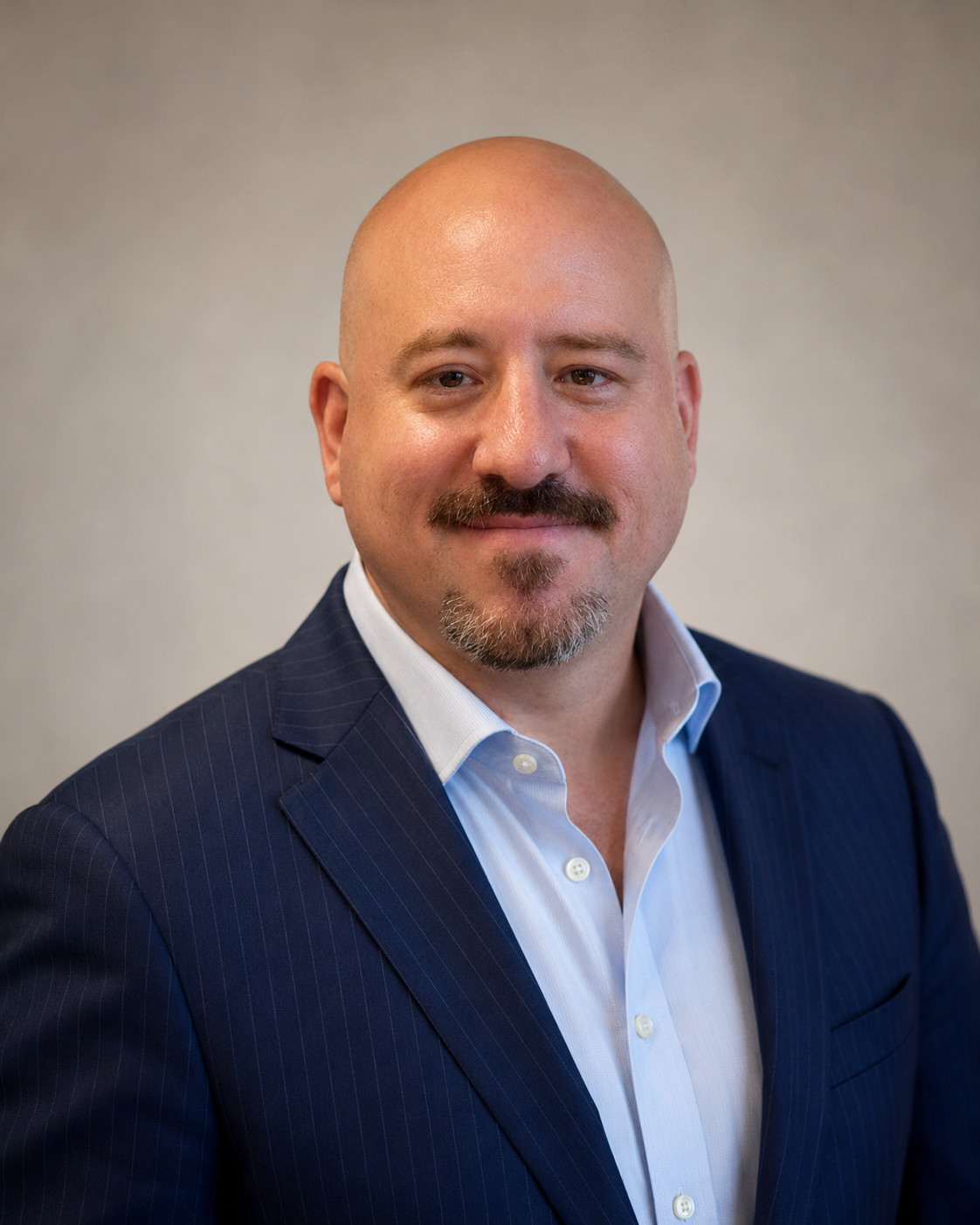
Christian's technical practice is grounded in graduate-level study in computer engineering and in international and national security through Stanford's Center for International Security and Cooperation (CISAC), part of the Freeman Spogli Institute for International Studies. There, his work concentrates on nuclear proliferation, cyber warfare, emerging technologies, and biosecurity governance — the same forces of power, deterrence, and strategic advantage that shaped the ancient world. He brings that lens to Statecraft, decoding the mechanics of intelligence, deception, and coercion from the rise of the first empires to the digital battlefield.
In 2025, Christian was accepted into the MIT Sloan Executive program, where he is focused on AI Business Transformation. The work bridges his deep technical expertise in artificial intelligence and machine-learning infrastructure with the executive and operational strategy required to lead AI-driven transformation at scale — connecting the engineering of intelligent systems to the leadership, governance, and decision-making frameworks that turn them into instruments of power.
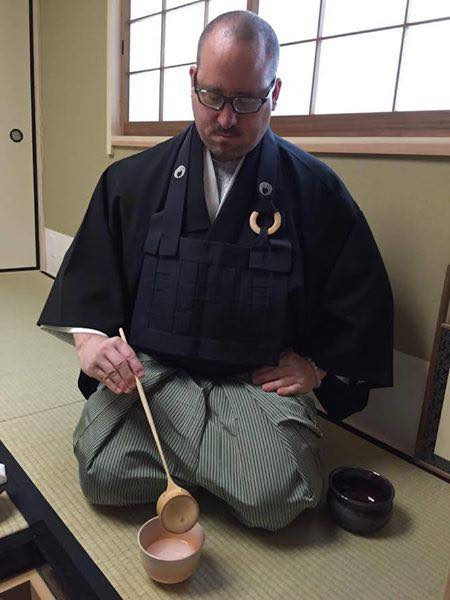
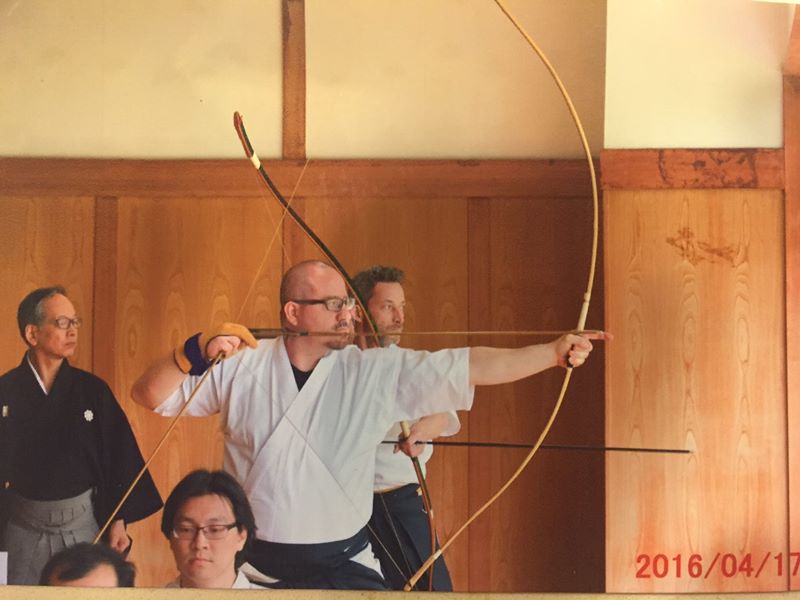
Beyond the technical and strategic work, his deepest personal interest is a lifelong infatuation with history — above all the military history, warfare, and statecraft of the ancient and medieval worlds. It spans the Greek and Roman civilizations of antiquity and the Japanese Sengoku and Edo periods, and it is, quite simply, an obsession rather than a credential: the daimyō and clan rivalries of Japan, the legions and senate of Rome, the hoplites and city-states of Greece, and the quiet arts of governance and culture that surrounded them all. He makes no claim to scholarship — only to a long-running fascination that, together with his formal study, is what drives his interest in ancient and medieval statecraft.
Professionally, Christian is a cybersecurity architect and defense operations specialist whose work spans defensive operations, secure cloud and AI infrastructure, and the strategic study of modern conflict — all of it oriented toward a single objective: protecting national security through disciplined Red and Blue Team tradecraft.
His technical foundation is built on computer engineering, with hands-on experience in Wi-Fi chipset and embedded system design — the silicon-and-firmware layer where radio, protocol stack, and low-level execution converge. Working at the seam between hardware and software, he examines boot chains, microcode, and the driver surfaces of wireless and embedded chipsets, building a defender's intuition for the vulnerabilities that live beneath the operating system — the kind that never surface in a vulnerability scanner but shape every system that runs above them.
That hardware fluency drives his work in firmware analysis and defensive research: extracting, reversing, and analyzing the code that runs before the OS to understand exactly how it can be compromised. He builds custom Python tooling and AI low-code workflows for vulnerability assessment and forensic analysis, mapping adversary behavior across the MITRE ATT&CK framework — initial access and execution, persistence and privilege escalation, defense evasion, credential access, lateral movement, and exfiltration. His focus is not theoretical risk but the concrete mechanics of finding a vulnerability, reconstructing how an adversary would exploit it, and proving whether defensive controls can detect and contain the compromise under real conditions.
He leads defensive operations that protect critical and national security infrastructure — gathering intelligence on adversary tradecraft, performing forensic analysis of exploits and breaches, and architecting the controls that detect, contain, and hunt threats back. The two halves of his practice feed each other: every adversary technique he studies sharpens the detections, controls, and resilience he architects on the defensive side, where he secures multi-cloud and AI/ML environments hardened to FedRAMP, SOC 2, and ISO 27001 standards.
His operational methodology is grounded in practical Red Team and Blue Team tradecraft, with Purple Team engagement serving as the connective layer that unites defensive operations, information gathering, and forensic analysis in a single mission: protecting people, assets, and national security.
On the Red Team side, he treats the MITRE ATT&CK framework as an intelligence map of adversary behavior — a way to understand how threats move so that defenses can be built and validated against them. Adversary techniques are studied and emulated — reconnaissance, initial access, execution, persistence, privilege escalation, defense evasion, credential access, discovery, lateral movement, command and control, collection, and exfiltration — not to conduct offensive operations, but to pressure-test the controls entrusted with protecting people and assets. This includes analysis of techniques such as packet-level reconnaissance, phishing and exploit chains, living-off-the-land execution, scheduled-task and WMI-based persistence, credential attacks including LSASS access and Kerberoasting, token manipulation, process injection, pass-the-hash, RDP and remote-service abuse, and covert or encrypted command-and-control channels. The objective throughout is protective: to determine how security controls, monitoring, architecture, and operational processes hold up under realistic adversary pressure — and where they leave people, data, and infrastructure exposed.
On the Blue Team side, those same adversary behaviors are translated into detection, response, and forensic opportunities. Defensive operations focus on detection engineering, SIEM and XDR correlation, behavioral analytics, threat-hunting hypotheses, endpoint and identity telemetry, network and packet analysis, incident investigation, forensic reconstruction of exploits and breaches, and response validation. Rather than treating individual alerts in isolation, the methodology correlates activity across the attack lifecycle to identify patterns, reconstruct the adversary's path through forensic evidence, validate controls, and distinguish malicious behavior from normal operational activity — ensuring that protective measures remain effective without disrupting the people and processes they defend.
Purple Teaming brings these disciplines together through structured, collaborative exercises in which adversary techniques are studied and validated against defined controls while Blue Team analysts observe, detect, investigate, and respond. Findings are reviewed jointly to determine what was visible, what was missed, which detections fired, whether telemetry provided sufficient context, and how effectively the organization could reconstruct and forensically analyze adversary activity after the fact — all in service of closing the gaps that put people and assets at risk.
The result is a continuous validation cycle: Red Team operations gather intelligence on adversary tradecraft and expose defensive gaps; Blue Team operations convert those findings into improved visibility, detections, hunting logic, forensic procedures, and response playbooks; and Purple Team exercises validate those improvements through repeated, protective adversary emulation. This creates a closed-loop defensive model — purpose-built to protect people, assets, and national security — in which information gathering, forensic analysis, and Red and Blue Team tradecraft continuously inform and strengthen one another.
- —Recreational Flying
- —Japanese History & Culture
- —Collecting Nihonto and Tosogu
- —Practicing Traditional Japanese Arts
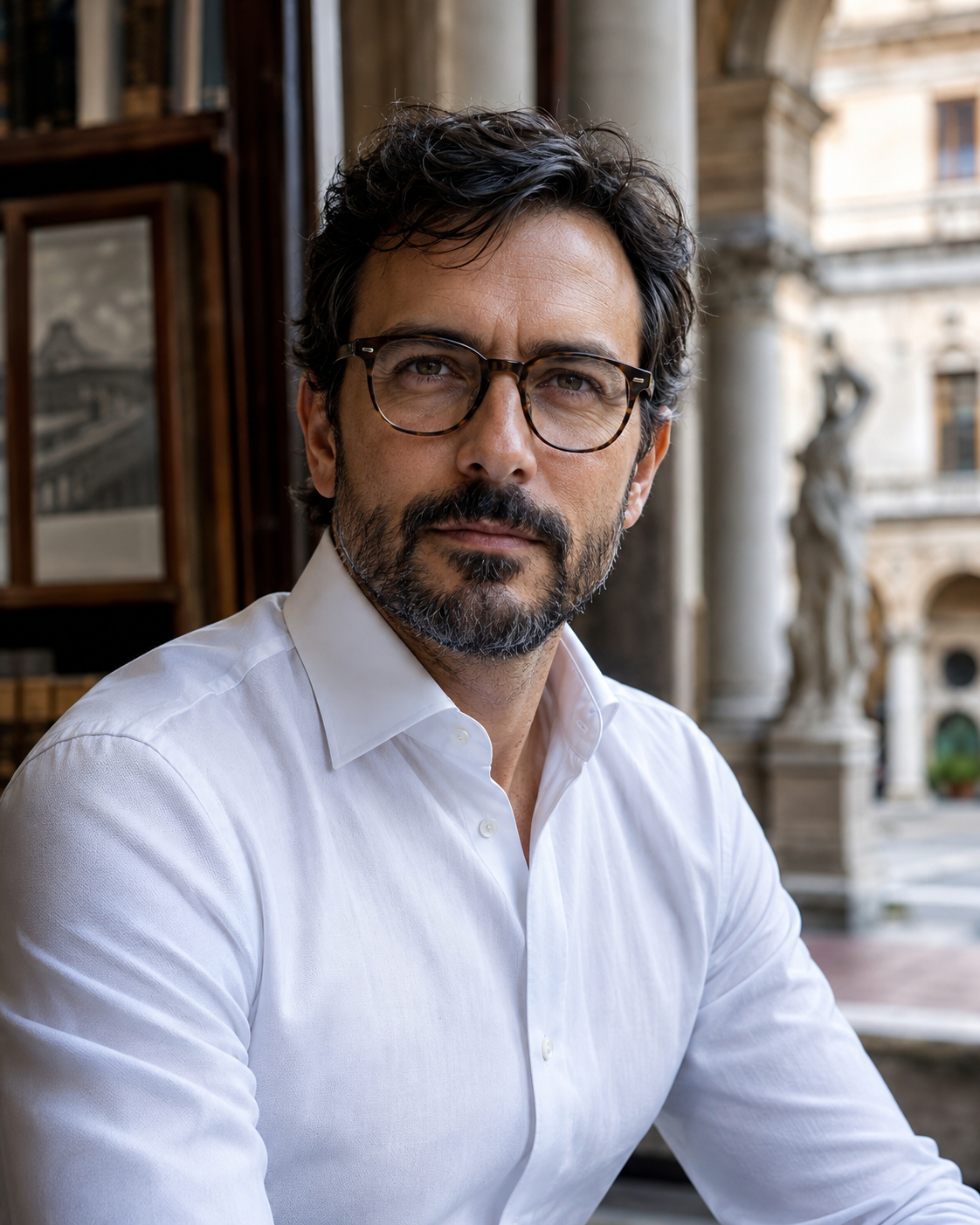

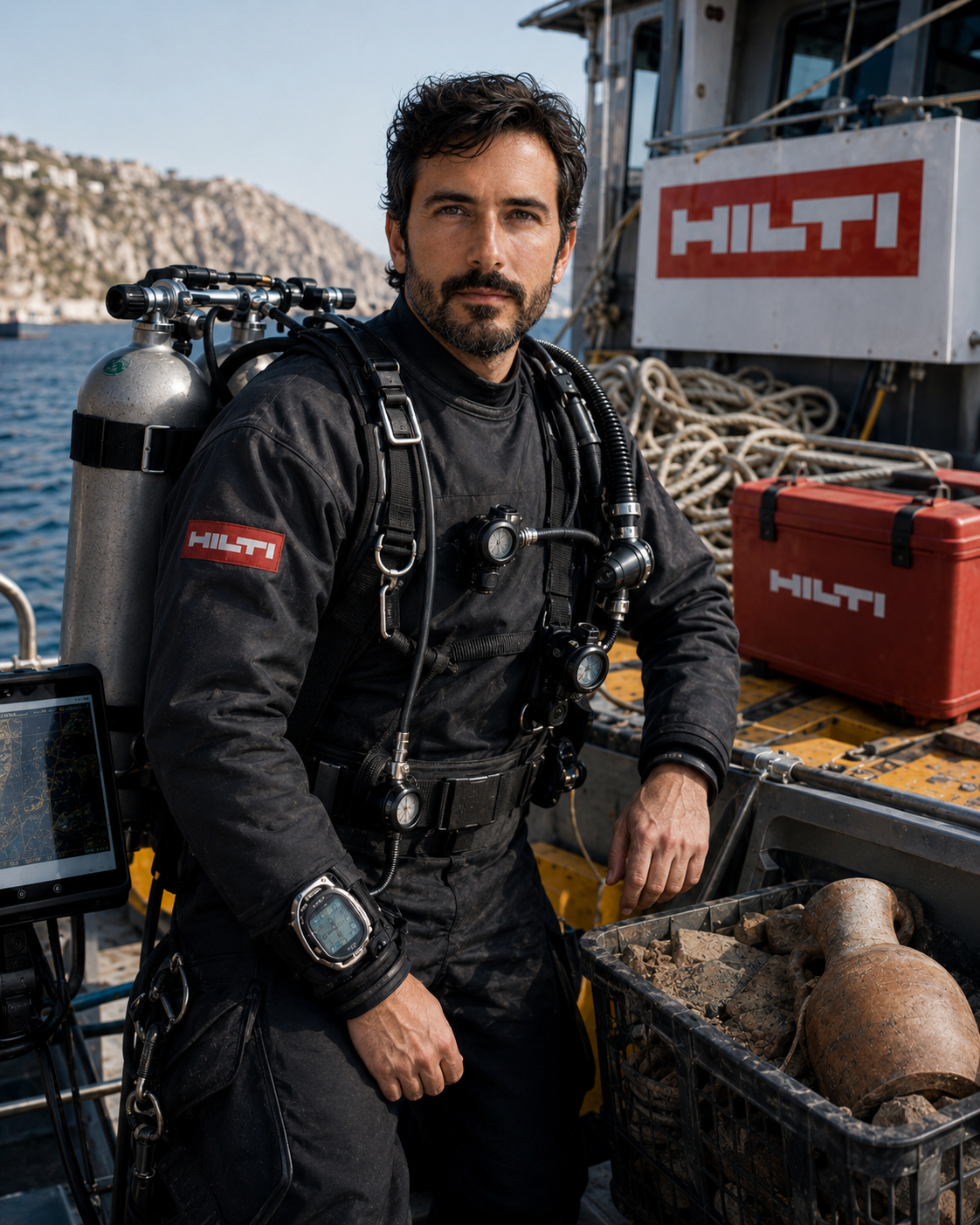
Alessandro Giacomo De Luca is a classical archaeologist and researcher at the University of Rome, whose work centers on the archaeology of ancient Rome and ancient Greece. He holds a Bachelor of Science in Classical Archaeology and Archaeological Studies from the University of Rome, and both a Master's and a PhD in the field from the University of Naples Federico II.
Raised primarily in Rome and having lived throughout Italy, he trained as both a classical archaeologist and an underwater archaeologist. His fieldwork spans the Bay of Naples and the Roman hinterland, as well as major submerged sites in Egypt — including Herculaneum and Alexandria — where he has worked on the recovery and study of artifacts from the ancient port complexes.
His research draws together the material culture, urbanism, and maritime networks of the classical Mediterranean, bringing a field archaeologist's eye to the civilizations Statecraft examines.
- —Spending time with his family
- —Scuba Diving
- —Underwater Sonar (Side-scan sonar)